
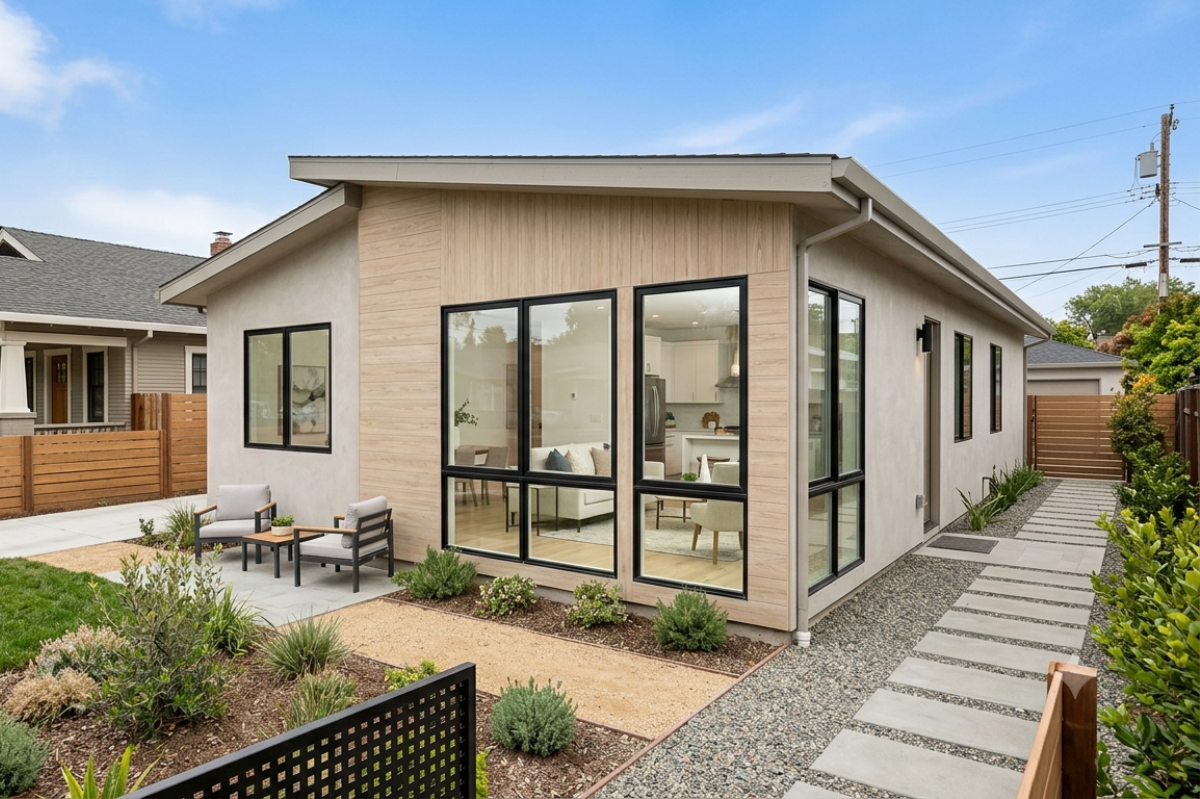
San Jose ADU Condo Sells for $530K; First of its Kind in CA
In a milestone moment for California’s real estate market, a newly constructed backyard cottage in San Jose has become the first accessory dwelling unit (ADU) in state history to be sold independently as a condominium.
The 749-square-foot, two-bedroom, one-bathroom detached unit located on Josefina Street near downtown San Jose closed escrow for $530,000. The transaction represents a potential breakthrough for affordable homeownership in a region notorious for some of the highest housing costs in the nation.
A New Path to Ownership
Unlike traditional ADUs—often called "in-law units" or "granny flats"—which are strictly rented out or sold alongside the main house, this property was sold with its own separate deed and will receive its own property tax bill.
"We're unlocking homeownership opportunities at lower price points, one ADU at a time," San Jose Mayor Matt Mahan said in a statement celebrating the sale. "We're not waiting for the cost to come down; we're using innovative policies to create affordability wherever we can."
The $530,000 price tag is an anomaly in Santa Clara County, where the median price for a single-family home sits at a daunting $2.1 million, and even standard condominiums average over $700,000. The unit operates like a small, detached single-family home, featuring its own private entrance, standalone parking, and separately metered utilities.
The Law Behind the Blueprint
The historic transaction was made possible by Assembly Bill 1033 (AB 1033), a state law enacted that allows California municipalities to opt into a framework where ADUs can be converted into condominiums and sold separately.
San Jose was the first city in California to officially adopt the local ordinance. Under the guidelines, while the buyer fully owns the physical structure, they must enter into a micro-HOA (Homeowners Association) agreement with the primary homeowner on the lot to manage shared components like driveways, walkways, or roofs.
The buyer, identified as a local resident named Flacken, moved into the home just days after closing. "It will be helping people who want to own a place more affordable and more easy to get a home," Flacken said.
Scalability and Roadblocks
While housing advocates view the sale as a massive proof of concept, experts warn that scaling the model will take time. It took nearly two years from San Jose’s initial adoption of the ordinance to clear the administrative hurdles necessary to finalize this first sale. Homeowners looking to replicate the process must navigate a dense thicket of property subdivision rules, utility separation, and easement permitting.
Furthermore, because this is a brand-new asset class, traditional mortgage lenders remain hesitant due to a lack of comparable sales data.
Nevertheless, the pipeline is beginning to move. San Jose officials confirmed that another ADU condo has already been approved for sale, and two more are currently undergoing city review. If other cities across the Golden State follow suit, these backyard cottages could soon become the next generation of starter homes for working-class families priced out of traditional real estate.


