
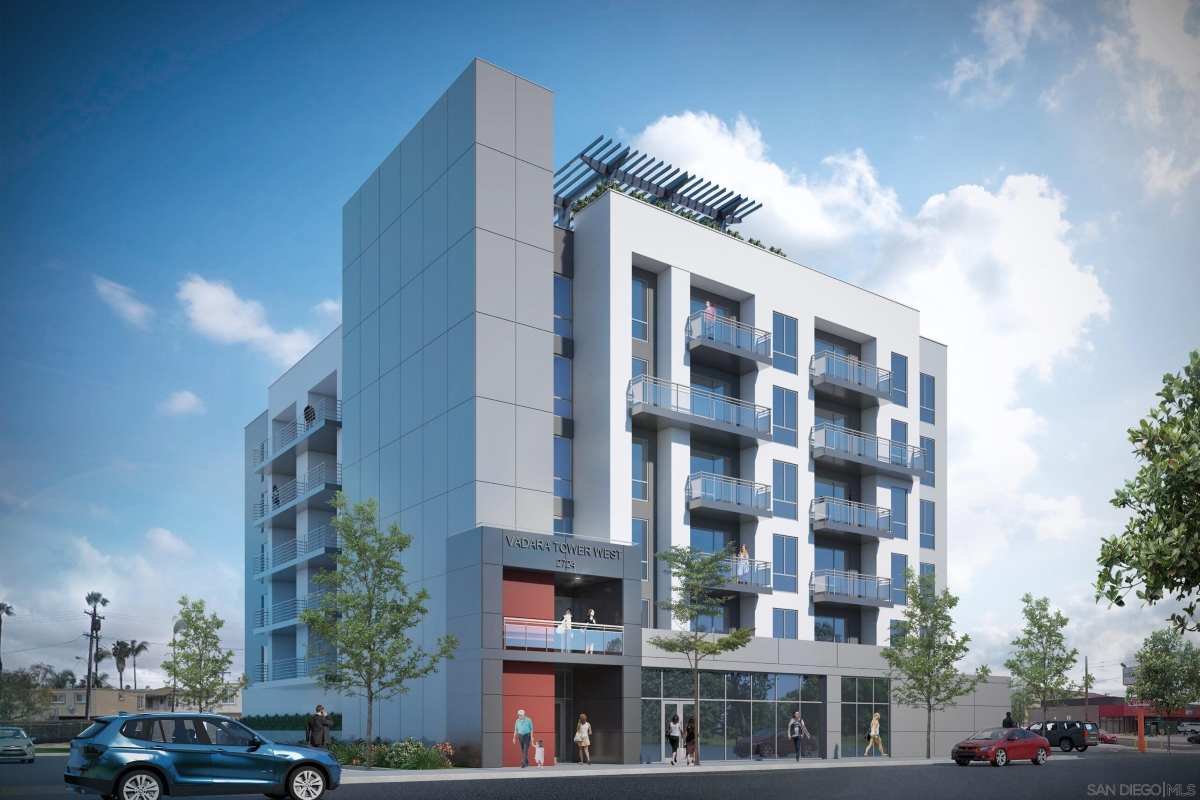
San Diego Apartment Vacancies are the Highest this Century
Apartment vacancies hit a record high of 6.2% at the end of June, according to real estate tracker CoStar. That was the highest in more than 25 years of data, and blew past a previous record of a 5.7% vacancy rate in 2009.
It was just a few years ago, in summer 2021, when the region’s vacancy rate was 2.6% — the statistical equivalent of one renter walking out of an apartment and a new tenant walking in a week later.
Vacancies have not, in most cases, resulted in noticeable rent decreases. San Diego County average asking rent was $2,583 a month in late June, up 0.5%, in a year. That figure combines studios, one, two and three bedrooms, across nearly 300,000 units spread out across San Diego County.
CoStar cited a surge in apartment construction as the main reason for increased vacancy and sluggish rent growth. San Diego County built 6,927 apartments in 2025, which was the highest in 25 years of data. There are roughly 4,000 new apartments under construction this year, still way above historical averages.
Experts have also pointed to affordability challenges, such as persistent inflation and sluggish wage growth, of San Diegans as another factor why rents aren’t rising as much. It’s the same across the U.S. with median one-bedroom national rent up 0.7% in a year, according to Zumper’s national rent report for May. San Diego ranked No. 11 as the most expensive market in the U.S. with rents unchanged annually.
Lucinda Lilley, an apartment specialist who consults for several property management firms in San Diego County, said the main issue she sees is affordability challenges. As evidence, she points to an increase in late rent cases, where tenants often cite economic hardship, and more renters who used to live alone deciding to take on a roommate.
What people can afford these days has changed,” Lilley said.
Another factor in San Diego County was a banner year for affordable housing apartment construction. The region added 3,836 rent-restricted units in 2025, according to the California Housing Partnership. That’s the highest number of subsidized apartments added to San Diego County in a given year in records dating to 1987.
Almost all of the new rental units are required to stay affordable for 55 years and are typically given to low-income tenants using Section 8 housing vouchers. Presumably, at least some of those renters in new low-income units will no longer be competing for market-rate units.
In addition, new apartment complexes take a while to fill up, and the market is clearly affected by so many new complexes. Renters aren’t like home shoppers who buy a condo before it is completed. Some landlords are struggling for tenants and rolling out the deals. For example, the new 442-unit AMLI Aero complex opened in September and has a 72% vacancy rate, said CoStar. It has reduced rents since its opening and is offering up to 10 weeks free and two free parking spaces for some lease deals.
Competition among apartment complexes, CoStar said, is often what causes rents to drop. Many have launched deals — not just new complexes like AMLI Aero — that give one month of rent for free, or longer, as a lease-signing bonus.
“We are a concession-driven market,” Lilley said. “Rent has flattened out, increases are not happening a whole lot. Concessions are often required to attract tenants.”
Rent can vary a lot based on where someone chooses to live. For instance, rents have fallen in downtown San Diego and Mission Valley, but are up in North County cities of Oceanside and Carlsbad.
Vacancy is much different across San Diego County. Downtown San Diego has a vacancy rate of nearly 12% but wealthy beach communities of Del Mar, Encinitas, Solana Beach and La Jolla have vacancy rates around 3%.
Will higher vacancy rates eventually mean falling rents? CoStar predicts average asking rents will drop 1.7% by the end of the year, or $46 a month, but start climbing again in 2027 and 2028. CoStar’s prediction for the next few years is based on the belief that apartment construction will start to slow and supply will no longer outpace demand.
CoStar breaks down rents by submarkets to get bigger statistical areas. Some markets might raise eyebrows, like Balboa Park, because it has some of the oldest apartments in the county, which is why its rents — on average — are lower. Here’s how rent breaks down by area, ranked by vacancy:
Downtown San Diego
Average monthly rent: $3,137, down 0.2% annually
Vacancy rate: 11.9%
Mission Valley/North Central (Clairemont, Kearny Mesa, Allied Gardens)
Average monthly rent: $2,899, down 0.9% annually
Vacancy rate: 9.4%
Balboa Park (North Park, University Heights, Hillcrest, South Park)
Average monthly rent: $2,173, down 0.2% in a year
Vacancy rate: 6.9%
North I-15 Corridor (Escondido, San Marcos)
Average monthly rent: $2,512, up 1% annually
Vacancy rate: 6.7%
Chula Vista/Imperial Beach
Average monthly rent: $2,490, up 0.3% annually
Vacancy rate: 5.8%
South I-15 Corridor (Sorrento Valley, Miramar, Mira Mesa)
Average monthly rent: $3,106, up 0.6% annually
Vacancy rate: 5.5%
Poway/Santee/Ramona
Average monthly rent: $2,250, up 0.4% annually
Vacancy rate: 5.3%
East County (La Mesa, El Cajon, Grossmont, Rolando Village, Talmadge, College Area)
Average monthly rent: $2,012, up 0.2% annually
Vacancy rate: 5.2%
Central Coast (Pacific Beach, Mission Beach, Ocean Beach, Point Loma, Coronado)
Average monthly rent: $2,471, up 0.7% annually
Vacancy rate: 5%
North County (Oceanside, Carlsbad, Vista)
Average monthly rent: $2,599, up 0.9% annually
Vacancy rate: 4.9%
Outlying San Diego County (Julian, Campo, Jacumba Hot Springs, Alpine)
Average monthly rent: $2,169, up 0.3% in a year.
Vacancy rate: 4.8%
National City/South Central
Average monthly rent: $1,960, unchanged year-over-year
Vacancy rate: 4.7%
North Shore Cities (Del Mar, Encinitas, Solana Beach)
Average monthly rent: $3,654, up 2.8% annually
Vacancy rate: 3.8%
La Jolla/UTC
Average monthly rent: $3,348, up 3.1% annually
Vacancy rate: 3.2%
Source: SDuniontribune by Phillip Molnar


